Learn to care for plants
Start with plant identification, watering, light, growing media, and safe tool care. Watch demonstrations and practise alongside your mentor.

Horticulture and Growing Apprentice
Applications open · Upper elementaryLearn to grow and care for plants, create healthy growing spaces, and take responsibility for living things. Develop practical horticultural skills through real projects and close coaching.
Start your application ↓The role
Take increasing responsibility for the school’s plants and growing projects. Learn to observe carefully, respond to changing needs, and create productive, attractive growing spaces.
A good fit for a curious, dependable student who enjoys nature, works patiently, and follows through. No previous gardening experience is required.
Your mentor approves tasks and tool use. Learn safe routines, report concerns promptly, and ask for help when a plant or task needs attention beyond your experience.
How you’ll grow
Start with plant identification, watering, light, growing media, and safe tool care. Watch demonstrations and practise alongside your mentor.
Manage assigned plants and plan an approved growing project. Track progress, investigate problems, and adjust your care as you learn.
Keep a growing journal, project portfolio, and record of your hours. Your mentor signs off skills as you demonstrate knowledgeable, reliable care.
Once you’re selected
Your mentor will explain your assigned plants, tasks, schedule, and skills checklist before you begin. Responsibility increases as you demonstrate readiness.
Meet your mentor, tour the growing spaces, learn safe routines, and agree on a care schedule. Establish where tools, records, and supplies belong.
Check your assigned plants, complete approved tasks, record observations and active working time, and leave the area ready for others. Bring concerns to your mentor.
Review your hours and evidence with your mentor. Celebrate progress, identify what needs more practice, and agree on your next responsibilities.
Record the date, task, time spent, and a brief learning note for each session. Your mentor reviews and verifies the log.
Your mentor signs off each area when you can demonstrate it reliably and explain your choices. If a skill needs more practice, you will receive feedback and another opportunity to demonstrate it.
Final review: Present your project, discuss your learning with your mentor, and confirm that all required skills and 200 hours are complete. The certificate is awarded after mentor sign-off.
Choose a useful project with your mentor, such as a culinary herb garden, a seed-to-harvest crop, a propagation collection, or an improvement to a school growing space.
Plants do not always grow as expected. Your evidence should show thoughtful care, sound decisions, and learning from the outcome.
What you’re working towards
Earn a Certificate of Achievement in Horticulture and Growing by completing 200 supervised apprenticeship hours and demonstrating the required skills. Presented by CE Alliance in collaboration with Evergreen Leadership Academy.
Your certificate, mentor-signed skills record, and project portfolio will describe what you have learned and demonstrated. Build a foundation for future learning in horticulture, greenhouse and nursery work, landscaping, food growing, and environmental stewardship.
This is a school apprenticeship certificate recognizing your learning and practical experience.
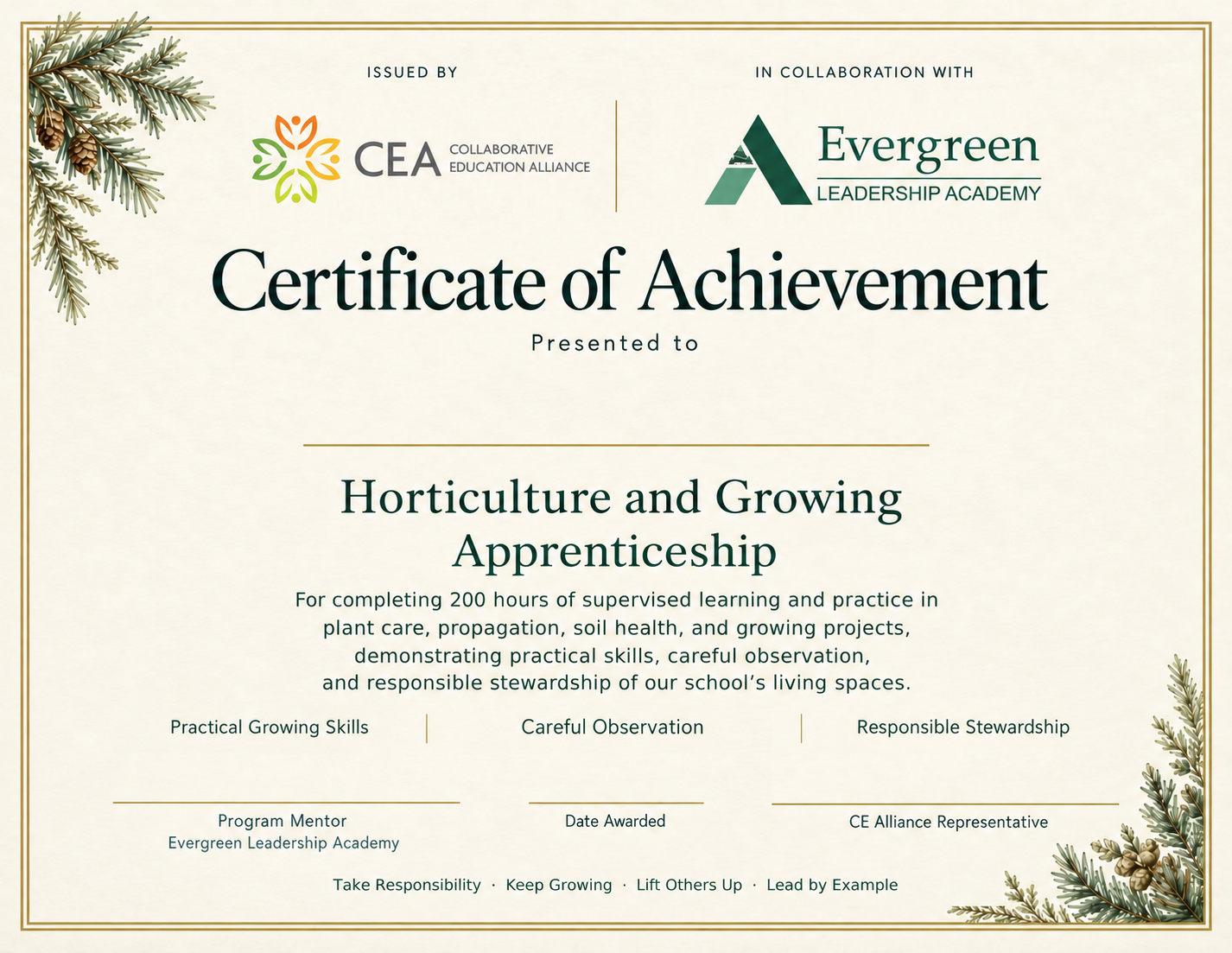
The program includes guided instruction, plant care, growing projects, planning, recordkeeping, and helping others learn. At 5 hours a week, 200 hours would take about 40 weeks.
Your schedule and milestones will be agreed with you, your family, and your teachers. Academics, wellbeing, and readiness come first.
Earning the certificate requires 200 completed hours and mentor sign-off on practical competence, reliable care, responsible tool use, and a completed growing project.
The selection process
Tell us why this work interests you and how you would follow through. We’re looking for willingness to learn, careful observation, and dependability.
Applying does not guarantee an interview or placement. Shortlisted students will be invited to meet with us.
Complete every required field below in your own words. Tell us about your interests, responsibilities, and approach to solving a plant-care problem. Look for the on-screen confirmation after submitting.
Shortlisted students will receive an interview invitation through school. Discuss your interests, availability, dependability, and everyday plant-care situations. Bring your questions, too.
The school team considers readiness, willingness to learn, judgment, and dependability. We share the outcome with applicants through school before a placement begins.
Once selected: We will confirm family consent, identify your staff mentor, agree on a schedule and learning plan, and complete an orientation before you take on regular responsibilities.
Your application
Use your own words. A few thoughtful sentences for each question is enough. An adult may help you read the questions, but we want to hear your ideas.
For current Evergreen upper elementary students. No previous gardening experience is required.
After you submit, look for the confirmation message. If you do not see it or need help, email [email protected].